Fats, Health, and the Brain: A Clear, Honest Guide to Understanding Dietary Fat
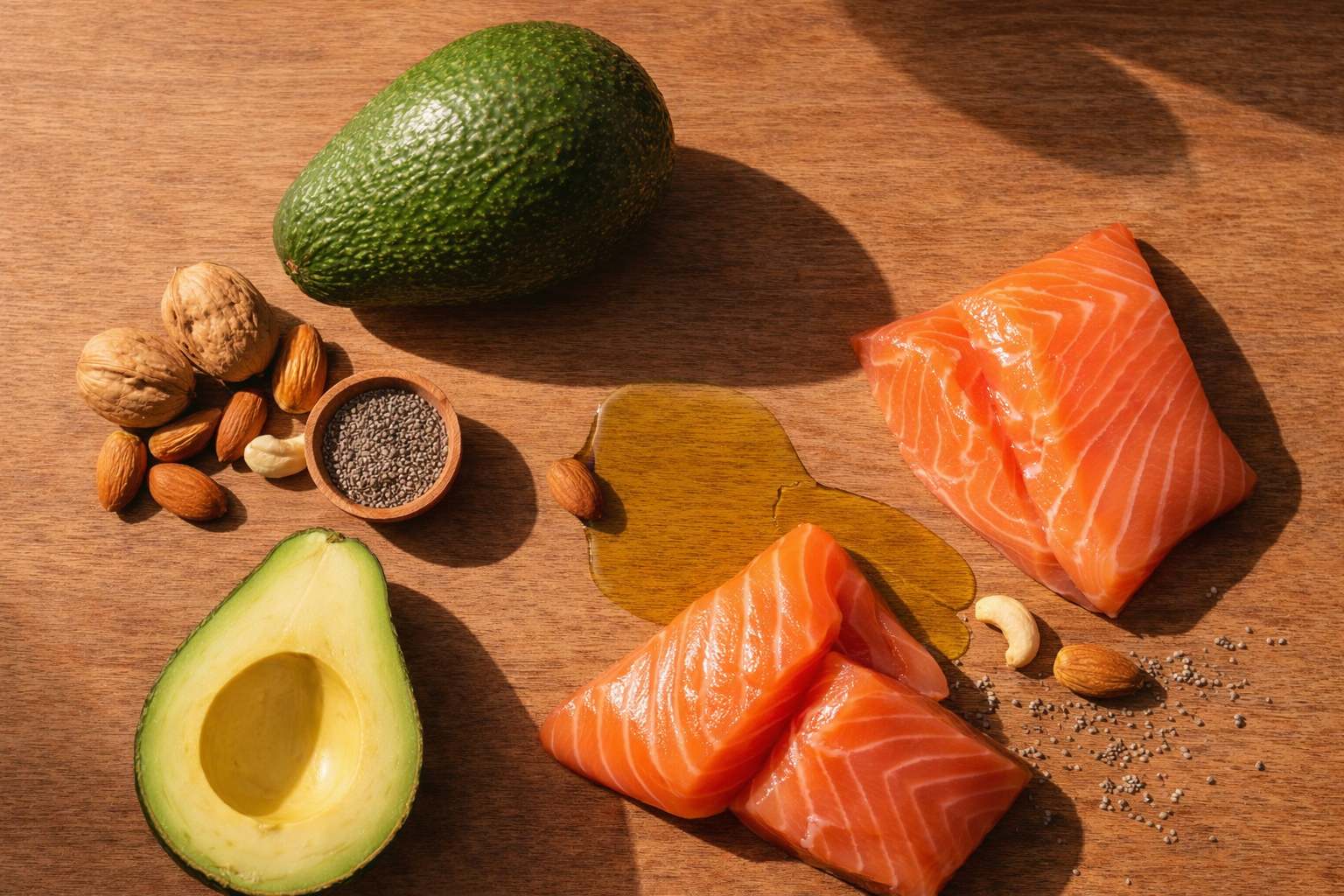
Fat has worn many labels over the decades: villain, miracle, trend, taboo. In reality, dietary fat is none of these. It is a fundamental biological building block that forms cell membranes, supplies energy, shapes hormones, and supports brain function.
The confusion around fat largely stems from its link to cardiovascular disease. To understand fats clearly, we need to start where most people first encounter the fear: heart health and cholesterol. From there, this guide unpacks how fats behave inside the body and brain, why balance matters more than fear, and how to make everyday choices that support both physical and mental wellbeing.
Cardiovascular Disease Starts With Cholesterol Imbalance
Cardiovascular disease remains one of the leading causes of death globally. At its core is a slow, cumulative process: plaque formation in arteries, reduced blood flow, and increased risk of heart attack and stroke.
This process is closely associated with cholesterol imbalance, particularly:
- Elevated LDL cholesterol
- Insufficient HDL-mediated clearance
Understanding how this imbalance develops is key to understanding dietary fat.
Cholesterol: Not the Enemy, but the Transport System
Cholesterol has developed a bad reputation, often leading people to avoid fat altogether. In reality, cholesterol is a single molecule the body relies on to build hormones, repair tissues, and maintain cell membranes. What differs are the lipoproteins that transport cholesterol through the bloodstream.
- Low-density lipoprotein (LDL) delivers cholesterol to tissues. When LDL levels are high, particularly small, dense LDL particles, cholesterol is more likely to deposit in arterial walls, increasing plaque formation and cardiovascular risk.
- High-density lipoprotein (HDL) performs the opposite function. It retrieves excess cholesterol from tissues and arteries and returns it to the liver for recycling or excretion. HDL is protective not simply because it is "high," but because it is functionally effective at cholesterol clearance.
Cardiovascular risk rises when LDL delivery outpaces HDL removal.
What Raises LDL and What Supports HDL
Dietary patterns influence LDL far more than HDL. The strongest contributors to elevated LDL include:
- Trans fats from partially hydrogenated oils
- Excess saturated fat intake, particularly alongside low fibre and refined carbohydrates
- Diets low in soluble fibre
Trans fats are especially harmful. Produced through industrial hydrogenation, they raise LDL, lower HDL, and accelerate arterial plaque formation. This is why many countries have banned partially hydrogenated oils altogether.
Saturated fats are more nuanced. Whole-food sources such as eggs, yogurt, and meat can fit into a healthy diet. Problems tend to arise when saturated fats dominate the diet while fibre intake is low and refined carbohydrates are high. This combination promotes LDL elevation and metabolic strain for many individuals.
In contrast, HDL function is supported by:
- Diets rich in monounsaturated fats
- Adequate intake of polyunsaturated fats, especially omega-3s
- High fibre intake
- Overall dietary patterns such as the Mediterranean diet
This is why fat quality and dietary context matter more than fat avoidance.
Different Fats, Different Effects
Not all fats behave the same way in the body. Their chemical structure, particularly the number of double bonds, determines how stable they are, how they influence inflammation, and how they interact with cholesterol transport.
Saturated fats contain no double bonds and are structurally stable. They resist oxidation but tend to raise LDL cholesterol in many people. Their health impact depends on quantity, food source, and the presence of fibre and unsaturated fats in the diet.
Monounsaturated fats, found in olive oil, avocados, nuts, and seeds, consistently improve lipid profiles by lowering LDL cholesterol while maintaining HDL. They also support flexible cell membranes and metabolic health.
Polyunsaturated fats include both omega-3 and omega-6 fatty acids.
- Omega-3s, such as EPA and DHA from fish and ALA from chia, flax, and walnuts, reduce inflammation, support neuronal structure, and improve lipid balance.
- Omega-6s, found in nuts, seeds, and many plant oils, are essential for brain development and immune signalling. The issue is not omega-6 itself, but the modern imbalance created when omega-3 intake is too low.
Because polyunsaturated fats contain multiple double bonds, they are more susceptible to oxidation during prolonged or repeated high-heat cooking. This is primarily a concern in industrial frying environments where oils are reused. In typical home cooking, using fresh oil at moderate temperatures, clinical evidence continues to strongly support unsaturated fats for cardiovascular benefit.
Trans fats, by contrast, offer no benefit and should be avoided entirely.
Fats and Mental Health: Equally Important as Heart Health

While cardiovascular disease is often the first concern associated with fat, fat quality is just as critical for the brain.
The human brain is profoundly lipid-dependent. Nearly 60 percent of its dry weight is fat, and fat quality directly influences how neurons communicate, how signals travel, and how inflammation is regulated.
Omega-3 fatty acids are especially important for mood and cognition. EPA and DHA integrate into neuronal membranes, improving fluidity and signalling while helping resolve excessive inflammation. Meta-analyses show that EPA-rich omega-3 supplementation provides modest benefits for depressive symptoms when combined with holistic mental health care (Liao et al., 2019).
Omega-6 fatty acids, despite their reputation, are essential for brain development and immune function. Mental health benefits come not from eliminating omega-6, but from restoring balance by increasing omega-3 intake.
Saturated fats, while structurally stable and necessary in small amounts, may worsen metabolic and neuroinflammatory markers when consumed excessively within low-fibre, high-refined-carbohydrate diets. The solution is not elimination, but moderation and dietary context.
In short, the same fat patterns that protect the heart also support emotional regulation, focus, and stress resilience.
A Practical Eating Guide for Better Mental Health and Overall Health
Understanding fat is only useful if it changes how we eat. Think of the following as simple eating experiments rather than strict rules. Try them, observe how your body and mind respond, and keep what genuinely helps.
Although this guide is framed through a mental health lens, the same principles also support cardiovascular health, metabolic stability, hormonal balance, and long-term resilience. The brain and body respond to the same nutritional signals.
1. Anchor the Morning with Protein and Fat
Skipping breakfast or starting the day with sugar alone can trigger blood sugar swings that feel like anxiety. Beginning the day with protein and healthy fats helps stabilise energy and reduce stress-driven cortisol spikes.
- Go-to options: eggs with avocado, Greek yogurt with walnuts, or a protein shake with almond butter.
- What to notice: a steadier mood, fewer cravings, and more sustained focus through the morning.
2. Respect Your Fats: Freshness Matters
Fats are sensitive to heat, light, and time. When oils oxidise, they contribute to oxidative stress, which is linked to neuroinflammation and metabolic strain.
- Experiment with: storing oils in a dark cupboard away from heat, using more heat-stable fats such as avocado oil or small amounts of butter or ghee for high-heat cooking, and reserving extra-virgin olive oil for low heat or as a finishing oil.
- What to notice: clearer thinking, less post-meal heaviness, and steadier energy.
3. Pair Fats with Fibre
Fats are metabolised more smoothly when paired with fibre. This combination supports gut microbes involved in neurotransmitter signalling, immune regulation, and stress response via the gut–brain axis.
- A simple rule: include a fibre vehicle such as vegetables, beans, or seeds whenever you add fats like cheese, nuts, or oils.
- What to notice: fewer energy crashes and more even emotional regulation after meals.
4. Use a Weekly Omega-3 Rhythm
Instead of aiming for daily omega-3 perfection, experiment with consistency across the week. Two intentional servings of fatty fish help maintain brain cell membrane integrity over time.
- SMASH fish: sardines, mackerel, anchovies, salmon, and herring. For plant-based diets, algae-based DHA and EPA are effective alternatives.
- What to notice: gradual improvement in stress resilience, mood stability, and cognitive flexibility.
5. Track Recovery, Not Weight
Mental health improvements often show up in recovery before they appear on the scale.
- Pay attention: how quickly you emotionally settle after stress, whether your sleep feels restorative or wired and tired, and whether afternoon brain fog eases.
These signals often reflect whether your eating pattern is supporting both brain and body.
6. Follow the 80/20 Flex Rule
Rigid eating increases stress, and stress itself is inflammatory.
Aim to follow these principles most of the time, while leaving room for social meals, treats, and spontaneity without guilt. Psychological flexibility supports long-term mental and physical health better than dietary perfection.
Quick-Start Grocery List
- Stable fats include extra-virgin olive oil, avocado oil, and small amounts of grass-fed butter or ghee.
- Protein anchors include eggs, Greek yogurt, tempeh, smoked salmon, and lean meats.
- Fibre vehicles include chia seeds, berries, broccoli, lentils, and leafy greens.
- Omega-3 sources include sardines, wild-caught salmon, and anchovies.
Conclusion
Cardiovascular disease, cholesterol imbalance, and mental health are not separate stories. They are different expressions of the same underlying biology.
Fat is essential, complex, and often misunderstood. Health outcomes are shaped not by fat avoidance, but by balance, source, and context. When fats are chosen thoughtfully and eaten within fibre-rich, whole-food dietary patterns, they support both heart health and mental resilience.
When fear is replaced with understanding, fat returns to its rightful role: a nutrient that nourishes the heart, brain, and body together.
References
Kris-Etherton, P. M., Krauss, R. M., & Public Health Committee of the American Heart Association Nutrition Committee. (2021). Public health guidelines should recommend reducing saturated fat consumption as much as possible: Debate consensus. Journal of the American College of Cardiology, 77(14), 1747–1756. https://doi.org/10.1016/j.jacc.2020.12.050
Liao, Y., Xie, B., Zhang, H., He, Q., Xu, L., Lu, X., Wang, H. (2019). Efficacy of omega-3 polyunsaturated fatty acids in depression: A meta-analysis. Translational Psychiatry, 9(1), 190. https://doi.org/10.1038/s41398-019-0515-5
Mensink, R. P. (2016). Effects of saturated fatty acids on serum lipids and lipoproteins: A systematic review and regression analysis. World Health Organization. https://apps.who.int/iris/handle/10665/246104